
Buying Property in Phuket: A Foreign Buyer’s Guide to Ownership Rules & Process
Yes, foreigners can buy property in Phuket, and thousands do every year. Condominiums are the most straightforward route, bought outright in your own name, subject to a well-established foreign ownership allowance. Villas and land work differently: foreign nationals cannot hold freehold land title directly, so most villa buyers use a long-term lease or a properly structured company instead. None of this should put you off. It simply means the right structure matters more in Phuket than it might back home, and getting it right from day one is exactly what we help you do before you sign anything.
A Property-Linked Way to Stay in Thailand Long-Term
Since October 2025, buying a completed freehold condominium worth 3 million baht or more, registered in your name at the Land Department, has opened up a renewable long-stay visa route, officially an investment-based extension of stay under Thailand’s Non-Immigrant ‘B’ (Investment) category. It gives you the right to remain in Thailand for as long as you continue to hold the qualifying property, renewed periodically rather than granted once and forgotten.
It’s worth being precise about what this is and isn’t. It is not permanent residency, and it doesn’t grant Thai citizenship or the right to work. It’s a renewable, property-linked extension of stay, and for buyers who already want a Phuket condo in this price range, it adds a genuinely useful benefit on top of the property itself rather than being a reason to buy on its own. We can talk you through current eligibility when you’re ready.
Can Foreigners Buy a Condo in Phuket?
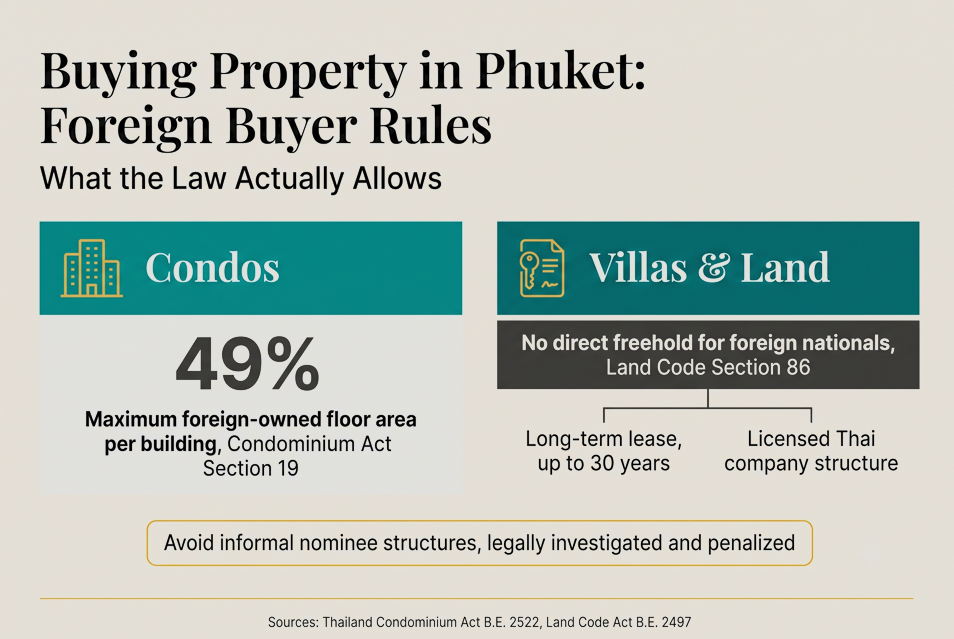
Yes, and it’s the cleanest path to outright ownership available to foreign buyers in Thailand. Under Section 19 of the Condominium Act, foreign nationals can own condominium units in their own name, as long as foreign ownership across the whole building doesn’t exceed 49 percent of its total floor area. That’s a real legal ceiling, not a guideline, and it’s tracked building by building at the Land Department.
In practice, this rarely stops a buyer. Popular buildings do sometimes reach their foreign quota, but when that happens the unit is still available to you through a registered leasehold instead of freehold, and many developments deliberately hold quota in reserve for exactly this reason. The one thing worth doing before you fall in love with a specific unit is confirming where that building sits against its quota, which takes us a phone call to check.
What Is the 49% Foreign Quota, and Does It Affect Me?
The 49% quota is the maximum share of a condominium building’s total floor area that can be held freehold by foreign owners, calculated by floor space rather than number of units. Once a building’s foreign quota is filled, further freehold sales to foreign buyers aren’t possible in that building until quota frees up, though leasehold purchase remains an option throughout.
This is worth checking early, not because it’s likely to be a problem, but because knowing where a building stands lets us steer you toward the right unit, or the right structure, from the start rather than after you’ve made an offer. A quota reform proposal has been under government discussion, but as of now the 49% rule remains the one in force, so that’s what we plan around.
Can Foreigners Own a Villa or Land in Phuket?
Not directly in your own name, but there are well-established, legitimate ways to control a villa long-term, and this is where working with a local team who does this daily makes the real difference. Thailand’s Land Code reserves freehold land ownership for Thai nationals, with one narrow legal exception requiring a very large qualifying investment that few individual buyers use in practice.
For everyone else, the two established routes are a registered long-term lease, typically up to 30 years and often structured with renewal terms built in, or a properly constituted Thai company holding the land, with the foreign buyer controlling operations through legitimate shareholding and directorship. Both are used successfully by foreign villa owners across Phuket every day. What matters is that the structure is set up correctly and transparently from the outset, which is precisely the part we handle for our buyers rather than leaving it to a generic template.
What Should You Avoid When Structuring a Phuket Purchase?
The one arrangement genuinely worth steering clear of is an informal nominee structure, where a Thai national holds land on paper purely to front for a foreign buyer’s control, with no real ownership stake of their own. Thai authorities actively investigate these arrangements, and the penalties for both parties are serious. This isn’t a grey area to negotiate around, it’s the one place where cutting a corner creates real risk instead of saving time.
The good news is that avoiding it costs you nothing. A correctly structured leasehold or a properly run Thai company achieves the same practical outcome, long-term control of your property, without stepping anywhere near that line. This is exactly the kind of detail that’s easy to get right when you talk to us before you commit to a structure, and much harder to unwind after the fact.
What Does the Buying Process Actually Look Like?
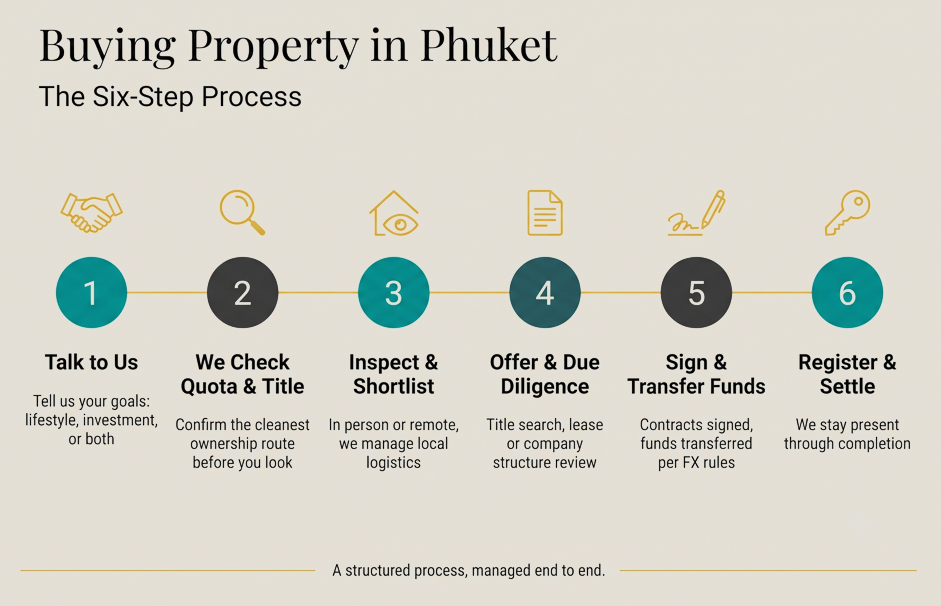
- Talk to us about your goals first. Lifestyle villa, rental investment, or both changes which structure and which area suits you.
- We check quota and title status on any condo you’re considering, and confirm the cleanest ownership route for any villa.
- Inspect and shortlist, in person or remotely, with our team managing local logistics.
- Make an offer and begin due diligence, including title search and, for villas, confirming the lease or company structure with a licensed Thai lawyer.
- Sign contracts and arrange the required funds transfer. Foreign condo purchases must bring funds into Thailand in foreign currency. Under Bank of Thailand regulations, any single transaction of USD 50,000 or more requires a formal Foreign Exchange Transaction (FET) form; for smaller amounts, your bank can issue a Credit Advice or Foreign Exchange Credit Note instead, which the Land Department also accepts.
- Register and settle, with our team present through completion rather than handing you off once contracts are signed.
Frequently Asked Questions
Can foreigners buy property in Phuket?
Yes. Foreigners can buy condominiums outright in their own name, subject to the 49 percent foreign ownership quota per building. Villas and land use a long-term lease or a properly structured Thai company instead, since foreign nationals cannot hold freehold land title directly.
What is the 49% foreign ownership rule in Thailand?
It’s the legal limit on how much of a condominium building’s total floor area can be freehold-owned by foreign nationals, set by Section 19 of the Condominium Act. It’s tracked per building, and once filled, foreign buyers can still purchase in that building through leasehold.
Can foreigners own land in Phuket?
Not directly, with one narrow exception requiring a large qualifying investment that’s rarely used in practice. Most foreign villa owners in Phuket instead use a long-term registered lease or a properly structured Thai company to control the land.
Is it risky for foreigners to buy property in Thailand?
The process itself is well-established and used successfully by thousands of foreign buyers every year. The real risk sits in cutting corners, particularly informal nominee arrangements, which is exactly why getting the structure right from the start matters more than any other single decision in the purchase.
Do I need a Thai lawyer to buy property in Phuket?
It’s strongly recommended, particularly for villa and land purchases involving a lease or company structure. Independent legal advice, alongside our local market guidance, is how we make sure every purchase is both legitimate and genuinely in your interest.
Does buying a condo in Phuket get me residency in Thailand?
Not permanent residency, but since October 2025 a freehold condo purchase of 3 million baht or more can qualify you for a renewable long-stay visa, an investment-based extension of stay tied to continued ownership. It doesn’t grant citizenship or work rights, and eligibility details are worth confirming with us directly given how new the framework is.
Get in touch
Thinking about buying in Phuket?
Enquire about buying property in Phuket talk to us before you commit to a structure, and we’ll take it from there.
Explore current opportunities on the Phuket property page.

Join The Discussion