
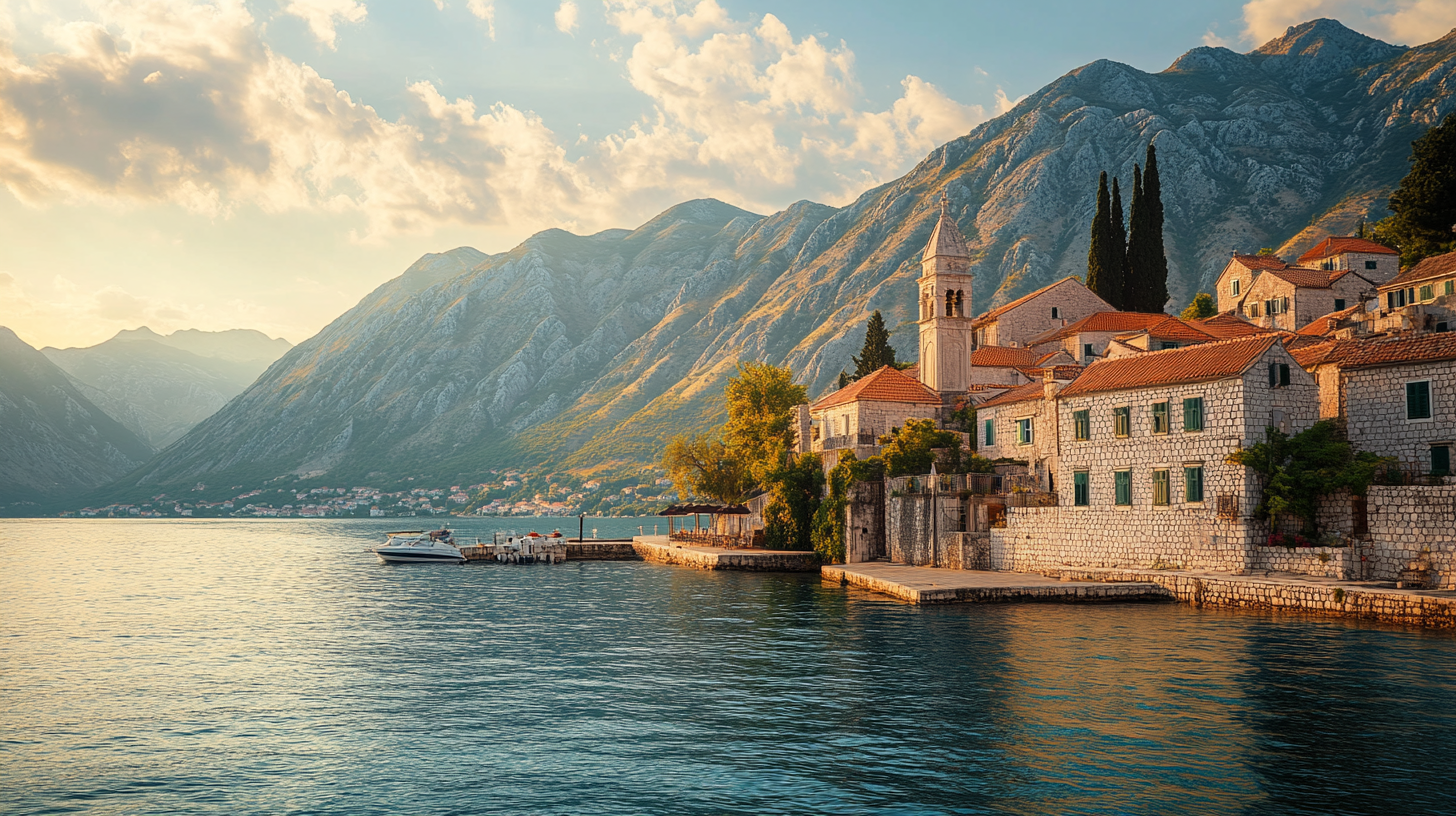
Buying Property in Montenegro: A Guide for International Buyers
Montenegro is one of the few markets on the map with no foreign ownership restriction at all. International buyers purchase apartments, houses, villas and commercial property with exactly the same rights as Montenegrin citizens, no reciprocity requirement, no special permits, and no nationality-based limits. The only real restrictions apply to agricultural land, forest land, and a handful of protected or border-adjacent areas that most buyers were never looking at anyway. For anyone who’s found ownership structures in other markets complicated, Montenegro is refreshingly straightforward, and that’s exactly why it’s become one of the most active international property markets in the region.
Can Foreigners Buy Property in Montenegro?
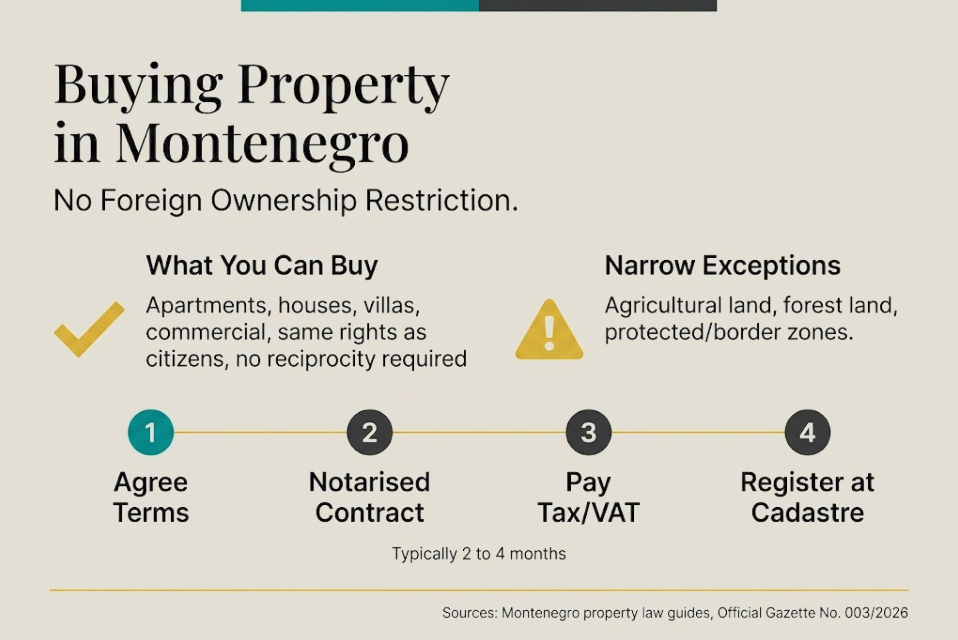
Yes, without restriction. International buyers can acquire apartments, houses, villas, commercial premises, and construction-classified land under the same legal conditions as Montenegrin nationals, registered directly in their own name through the national cadastre system. There’s no requirement for your home country to offer reciprocal rights to Montenegrin citizens, which sets Montenegro apart from many European markets where that condition applies.
The narrow exceptions are agricultural land, forest land, cultural monuments, and certain border or protected zones, categories that rarely intersect with the residential and lifestyle properties most international buyers are actually looking at.
What Makes Montenegro Different From Other International Markets?
Montenegro’s straightforward ownership model is a genuine differentiator, not just a marketing line. Where many popular international markets require a lease, a company structure, or a residency permit before a foreigner can hold meaningful property rights, Montenegro simply lets you buy, register, and hold full freehold title from day one. That means fewer moving parts, fewer structures to set up and maintain, and a clearer picture of exactly what you own.
This is part of why Montenegro has attracted such a genuinely international buyer base, with significant purchasing activity from the United States, Germany, Poland, Canada and across Europe, alongside growing interest from further afield.
Which Areas Do International Buyers Look at First?
Montenegro’s coast is where most international buying activity concentrates, led by Budva, Kotor, Tivat and Herceg Novi, each offering a different flavour of coastal living from lively resort towns to UNESCO-listed old town charm. Podgorica, the capital, draws a different buyer profile focused more on year-round living and commercial opportunity than holiday appeal.
Coastal demand is strong enough that it shapes pricing across the whole region, so buyers weighing a quieter, more accessible entry point are increasingly looking slightly inland or toward emerging areas along the coast, which is where local guidance genuinely pays for itself.
What Does the Buying Process Involve?
Buying property in Montenegro typically runs two to four months from offer to registered ownership, and follows a clear, well-established sequence: agree terms, sign a notarised purchase contract, pay the applicable property transfer tax or VAT on new builds, and register ownership at the local cadastre office. Because the legal framework doesn’t distinguish between local and foreign buyers, there’s no separate foreign-buyer approval process slowing things down.
One practical point worth planning around early: local mortgage financing for non-resident foreign buyers is uncommon, so most international buyers in Montenegro purchase in cash. That’s simply how the market works here, not a barrier specific to your situation, and it’s something we help you plan for from the outset rather than discover partway through a transaction.
Can Buying Property Lead to Residency in Montenegro?
Property ownership can support an application for temporary residence in Montenegro, though it isn’t automatic and isn’t the same as citizenship. Current rules, updated as of January 2026, generally require the property’s officially assessed tax value to meet a set threshold for this residence pathway to apply, and the application still involves its own documentation and approval process separate from the property purchase itself.
Frequently Asked Questions
Can foreigners buy property in Montenegro?
Yes, with no nationality-based restrictions. International buyers purchase most property types with the same ownership rights as Montenegrin citizens, registered directly in their own name.
Do foreigners need a reciprocity agreement to buy property in Montenegro?
No. Unlike many other European countries, Montenegro doesn’t require your home country to offer reciprocal property rights to Montenegrin citizens before you can buy.
What property types can’t foreigners buy in Montenegro?
Agricultural land, forest land, cultural monuments, and certain protected or border-adjacent zones. These exceptions rarely affect the residential and lifestyle properties most international buyers are considering.
How long does it take to buy property in Montenegro?
The process typically takes two to four months from agreed offer to registered ownership, covering the notarised purchase contract, applicable tax payment, and cadastre registration.
Can I get a mortgage as a foreign buyer in Montenegro?
It’s uncommon. Local mortgage lending for non-resident foreign buyers is limited, so most international buyers purchase in cash. This is worth planning for early in your search rather than assuming financing will be straightforward.
Get in touch
Considering Montenegro? Enquire about buying property in Montenegro and let’s talk through which coastal area actually fits what you’re after.
Explore current opportunities on the Montenegro property page.
Email: [email protected], or reach us on WhatsApp at +61 404 497 335
Sources used
- Multiple independent 2026 Montenegro property law guides, cross-checked for consistency on ownership rights, restricted categories, and process timeline
- com guide citing Montenegro’s Official Gazette (No. 003/2026, published 9 January 2026) for the current property-based temporary residence value threshold
© The data shown on this website and any other written communication has been offered by third parties and is assumed to be correct. The sale of the properties is managed by Rick Flay Real Estate, Australia. Our company does not guarantee their veracity or accept any responsibility for any errors. The offer may be subject to errors, price changes, omissions and/or withdrawal from the market without prior notice. Prior to purchase clients are advised to check with their legal advisors on all details pertaining to the sale/purchase. The information does not form any part of any contract for sale. We always recommend that you take independent, legal, financial and taxation advice. Additionally some photos, plans, specifications are indicative/illustrative only and may have been created by AI.

Join The Discussion