

Moving from Australia to Thailand is no longer a niche idea. The Australian Bureau of Statistics recorded a net loss of 17,000 Australian-born residents in the year to June 2025. That figure covers every destination and includes people who later return, so it is not a count of who is heading to Thailand. It does show that leaving is a real conversation for many households, driven by housing costs, a grocery bill that keeps climbing and a wish for a different pace of life. If you are weighing it up, you are not alone. In this guide I cover why Thailand appeals, the types of visa Australians commonly look at, how buying or renting a home works, and what to sort out before you book a one-way flight. I will keep the detail simple, because the right route depends on your age, income and plans.
Why Do Australians Look at Moving From Australia to Thailand?
Cost of living is the reason I hear most. A rent or mortgage payment that swallows most of a pay cheque, plus rising insurance, energy and grocery bills, can make a different life look attractive. Thailand can be cheaper in many everyday areas, but not all of them: imported food, international schools, private hospitals and flights home add up. Price a normal month in the exact neighbourhood you have in mind rather than relying on a headline comparison.
Lifestyle matters too. Thailand is only three to four hours behind Australia’s east coast, depending on daylight saving, which makes family calls and remote work for Australian clients practical. Bangkok offers big-city convenience, and Phuket offers a coastal pace. Different towns give you very different weather, costs and daily routines, so moving from Australia to Thailand is really a choice of which Thailand.
Tax is the other reason people raise, and it needs care. Moving countries does not automatically change your Australian tax position. The ATO decides residency using several tests, and people who live overseas can still be treated as Australian residents. If tax is a main driver, speak to a registered tax agent before you move, not after.
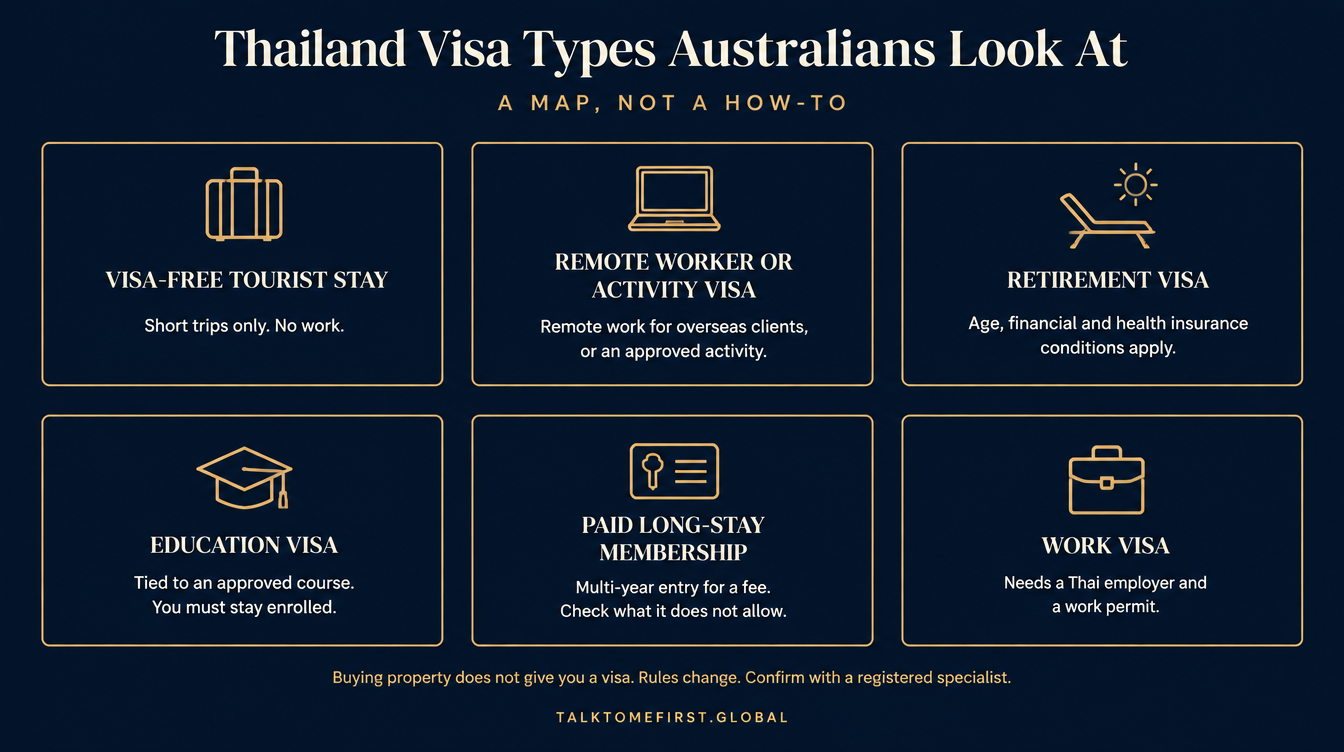
What Visa Types Do Australians Look at for Thailand?
I am not an immigration adviser, and visa rules change often, so treat this as a map of the main types rather than a how-to. The right route depends on your age, income, work and how long you want to stay, and a registered specialist should confirm the current requirements for your situation.
| Visa type | Who it suits | What to check |
| Visa-free tourist stay | Short holidays and exploratory trips | Tourism only, no work, and the permitted stay has been shortened |
| Long-stay remote worker or activity visa | People who work remotely for overseas clients, or take part in an approved activity | Conditions for each stay, and what work is permitted |
| Retirement visa | Older applicants who meet the age rule | Age, financial and health insurance conditions apply |
| Education visa | Study at an approved school or course | You must stay enrolled; it is tied to the course |
| Paid long-stay membership program | People who want a simpler multi-year entry for a fee | Cost, term and what it does not allow |
| Work visa | People with a Thai employer or business | Needs a sponsoring employer and a work permit |
One recent change to know about: Thailand has shortened the visa-free tourist stay for Australians from 60 to 30 days for entries from 15 September 2026, according to Fragomen’s immigration briefing. Government travel advice can lag behind, so confirm the current length with the Royal Thai Embassy before you book. For the retirement route, the Thai government publishes its retirement visa criteria.
Can Australians Buy or Rent a Home in Thailand?
Yes, with the right structure. Foreigners can generally buy a condominium unit freehold in their own name, within the building’s foreign ownership quota, which is capped at 49 percent of the total floor area. Villas and land work differently, because foreign nationals cannot hold freehold land title. Most villa buyers use a registered long-term lease or a properly structured Thai company. My Phuket guide for foreign buyers explains the quota and the structures, and my Bangkok condo guide covers the city market.
Buying a property does not give you a visa. Treat the visa and the home as two separate decisions, and make sure the property still makes sense if the visa rules change. If you have never lived in Thailand, rent for a few months first, outside peak holiday season, before you commit. It also pays to read about the mistakes buyers make overseas before you sign anything.
What Should You Sort Out Before Moving From Australia to Thailand?
- Confirm your visa route with a registered specialist, and do not assume a home purchase gives you the right to stay.
- Get advice from a registered tax agent on your Australian tax residency and on how any Australian income is treated.
- Arrange health insurance that covers you in Thailand, because Medicare generally does not cover treatment there.
- Rent in the area first, and build a monthly budget that includes housing, health cover, transport, visa costs and flights home.
- Use an independent Thai lawyer to check title, contracts and ownership limits before paying a deposit.
- Read the government’s Smartraveller advice for Thailand before you travel.
How Can I Help With the Whole Move?
My job is to make sure you do not make an expensive mistake in the wrong order. Talk To Me First is my independent advisory service for people thinking of moving, retiring or investing overseas. It exists to help you make an informed decision before you commit money, sign a lease or sell up at home. I do not mind where you move. I care whether it is right for you.
I have lived in the UK, Australia, Spain and Canada, visited 92 countries and spent more than 30 years in international property, and I work with a network of more than 500 affiliate agents and specialists in over 20 countries. I act as your strategist and coordinator. Regulated advice on tax, pensions, visas and legal matters comes from qualified specialists whom I introduce you to. I do not give that advice myself, and I will say so.
You choose the pace, from doing it yourself to having it done for you:
- A self-guided move guide, if you want to plan it yourself.
- A one-to-one consultation on your situation.
- A deeper strategy covering destination, timing and priorities.
- A relocation roadmap, with hands-on, step-by-step support through the move.
- Property help to buy or rent, or to sell at home before you go, through Rick Flay International Real Estate. I will always say so openly when a property is involved.
- Introductions to specialists in migration, legal, tax, foreign exchange, insurance and healthcare.
Tell me your budget, whether you want to rent or buy, your timing and which places you are considering. Talk to me first, and we will work out the right order of steps before you commit to anything. Get in touch or message me on WhatsApp on +61 404 497 335.
Frequently Asked Questions
Is moving from Australia to Thailand a good idea?
It can be, for the right person. The answer depends on your income, health needs, family ties and appetite for change. Rent in the area first, price a normal month honestly and take professional advice on visas and tax before you commit.
Do Australians need a visa to move to Thailand?
For a long stay, yes. Visa-free entry is for tourism only, and the length of stay has been shortened for Australians, so confirm the current rule with the Royal Thai Embassy. Longer stays need a visa that matches your situation, such as a remote worker, retirement or education visa.
Can I buy property in Thailand as an Australian?
Foreigners can generally buy a condominium unit freehold in their own name, within the building’s 49 percent foreign quota. Foreign nationals cannot hold freehold land, so villa buyers usually use a registered long-term lease or a properly structured Thai company. Take independent legal advice before paying a deposit.
Does buying property in Thailand give me a visa?
No. A property purchase and a visa are separate decisions. Choose a home that still makes sense if the visa rules change.
Will I still pay Australian tax if I move to Thailand?
It depends on your tax residency, which the ATO decides using several tests. Living overseas does not automatically end Australian residency for tax purposes, so speak to a registered tax agent before you go.
Can you help with visas and residency?
Yes. Through Talk To Me First I introduce you to qualified specialists in Thailand and Australia who handle the visa and tax detail, and I help you find the right property to rent or buy. I do not give visa or tax advice myself.
About the author. Rick Flay has more than 30 years of experience in real estate, with over 1,000 properties sold and rented across international markets. Rick Flay International Real Estate helps clients buy, sell and relocate through an international affiliate network of 500+ agents in 20+ countries.
Property, tax, health and immigration rules change, and the right decision depends on your circumstances. Nothing in this article is financial, legal, tax or immigration advice. Take independent professional advice before buying or moving.
© The data shown on this website and any other written communication has been offered by third parties and is assumed to be correct. The sale of the properties is managed by Rick Flay Real Estate, Australia. Our company does not guarantee their veracity or accept any responsibility for any errors. The offer may be subject to errors, price changes, omissions and/or withdrawal from the market without prior notice. Prior to purchase clients are advised to check with their legal advisors on all details pertaining to the sale/purchase. The information does not form any part of any contract for sale. We always recommend that you take independent, legal, financial and taxation advice. Additionally some photos, plans, specifications are indicative/illustrative only and may have been created by AI.



Join The Discussion